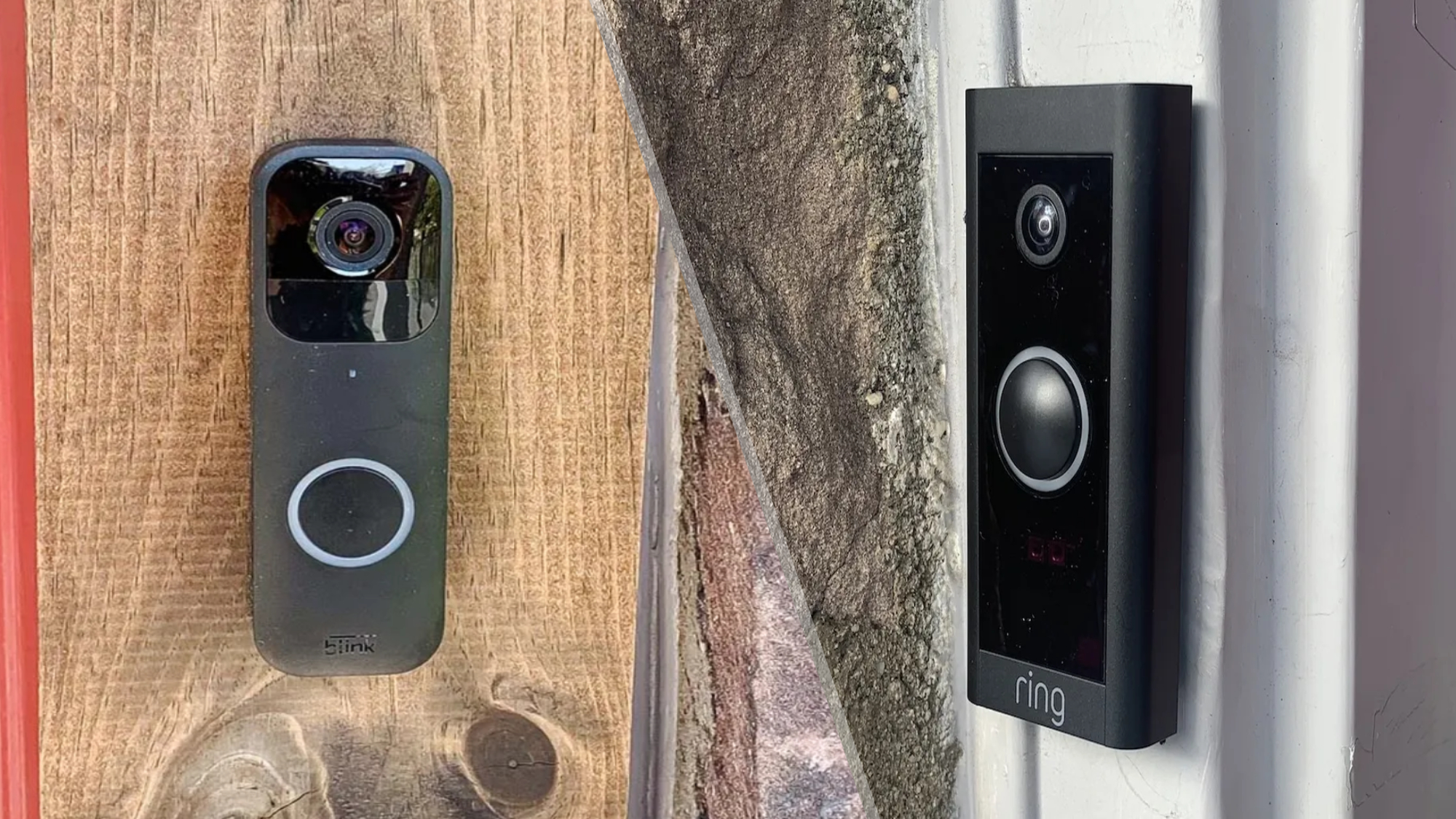
Blink vs Ring: Specs at a Glance
To keep this comparison grounded, we’re looking at the standard Blink Video Doorbell and the
Ring Battery Video Doorbell. Here’s how the core hardware stacks up:
| Feature |
Blink Video Doorbell |
Ring Battery Video Doorbell |
| Price (MSRP) |
~$59 |
~$99 |
| Video resolution |
1080p |
1080p with HDR |
| Night vision |
Infrared night vision |
Infrared night vision |
| Field of view |
135° horizontal, 80° vertical |
155° horizontal, 90° vertical |
| Person alerts |
Yes (with subscription) |
Yes (with subscription) |
| Package detection |
No |
Yes (with subscription) |
| Connectivity |
2.4 GHz Wi-Fi |
2.4 GHz Wi-Fi |
| Audio |
Two-way audio |
Two-way audio with noise cancellation |
| Power options |
AA batteries or wired |
Rechargeable battery or wired |
| Removable battery |
No (batteries inside housing) |
Yes, swappable pack |
| Smart home ecosystem |
Alexa, Blink devices |
Alexa, Ring devices, some third-party gear |
On paper, Ring clearly pulls ahead on video features, field of view and smart detection, while Blink wins on
upfront price and extreme battery life. The right choice depends on whether you’re squeezing every dollar or
you want the best day-to-day experience.
Price and Ongoing Costs
If you’re shopping on a strict budget, Blink usually costs less up front. It often drops to
impulse-buy pricing during sales, especially in multi-camera bundles.
Once you factor in subscriptions, the gap narrows a bit. Both brands use cloud recording plans:
- Blink Subscription is cheaper for a single doorbell and keeps storage costs low if you only have one or two cameras.
- Ring Protect costs a little more, but covers more devices and unlocks better smart alerts and rich notifications.
Over several years, the subscription cost will easily outweigh the $40 or so price difference between the
doorbells themselves. That’s why we lean toward Ring if you can stretch the budget.
Video and Audio Quality
Blink’s 1080p video is perfectly fine for basic porch monitoring, but it’s softer and less detailed than
Ring’s feed, especially once the sun hits your front step.
Ring’s HDR video makes a real difference when your doorway is backlit or in mixed lighting.
Faces and packages stay readable where Blink tends to blow out highlights or crush shadows.
On the audio side, both offer two-way talk, but Ring’s noise reduction and echo handling make conversations
feel less “walkie-talkie” and more like an actual call.
Alerts, Detection and Reliability
Reliability is where cheap video doorbells often fall apart. In our experience, Ring’s motion
detection and alert delivery are more consistent than Blink’s, especially on busier streets.
Blink’s motion alerts are acceptable for a calm entryway, but they’re slower and more prone to either missing
brief events or over-alerting in tricky lighting. Ring’s person and package detection (with a subscription)
does a better job of flagging what you actually care about.
Installation, Power and Everyday Use
Both doorbells are easy to install with just basic tools. Blink has a slight edge for renters: its small
footprint and AA battery option make it simple to mount and remove with minimal evidence.
Ring’s removable battery pack is cleaner for long-term use, though. Swapping a single pack is faster than
unscrewing Blink’s housing to replace AAs, and you can keep a spare Ring pack charged if your front door is
extremely busy.
Day to day, Ring’s app feels more mature. Settings are better organized, multi-camera layouts are cleaner and
it’s easier to fine-tune motion zones so you’re not buried in alerts.
Smart Home Ecosystem
Both brands are owned by Amazon, so Alexa support is strong across the board. You’ll get
announcements on Echo speakers, live views on compatible screens and the ability to arm or disarm with your
voice.
Ring pulls ahead if you want your doorbell to be part of a wider system. It ties in cleanly with Ring
security cameras, Ring Alarm, and a wider ecosystem of accessories like chimes and path lights. Blink has
improved, but still feels like a simpler, camera-only line with fewer advanced automations.
Which Should You Buy?
If you just want the smartest long-term choice and can afford it, go with the Ring Battery Video
Doorbell. Its video quality, faster alerts, better app and richer smart features make it the better
everyday product for most households.
Choose Blink Video Doorbell if:
- Your budget is tight and you mainly want basic notifications and check-ins.
- Your front door doesn’t see much traffic and you want extreme battery life.
- You already own other Blink cameras and want to stay inside that ecosystem.
Want to see how these stack up against other options? Our
Best Smart Doorbells 2025 guide
ranks Ring, Blink, Nest and Arlo picks side by side.
Ring vs Blink FAQ
Which is better overall, Ring or Blink?
Ring is better for most homes because it delivers clearer video, more reliable alerts and a more capable
app. Blink’s main advantage is price and battery life.
Is Blink cheaper than Ring in the long run?
Blink hardware is usually cheaper and its subscription plans are a bit lower, but if you add multiple
cameras the difference shrinks. At that point, we think Ring’s extra polish is worth paying for.
Do I need a subscription for Ring or Blink?
Both work without a subscription for live view and basic alerts. To save and review clips, or unlock
smarter detection features, you’ll need Ring Protect or a Blink Subscription plan.
Which doorbell is better for renters?
Blink is slightly easier to mount and remove without leaving marks, but Ring’s removable battery and
better app still make a strong case if you’re planning to keep it for several years.