Overview
A Smart Doorbell That Just Works (Most of the Time)
Smart doorbells are supposed to make life easier — not turn your front door into a beta test. That’s where
the Ring Battery Video Doorbell still shines. Setup is streamlined, alerts are fast enough that you rarely
miss visitors, and the app does a good job of surfacing what matters without drowning you in noise.
In our testing, the Ring Battery Video Doorbell consistently delivered reliable notifications and readable
1080p HDR video, even on tricky backlit porches. It does rely heavily on Ring Protect cloud plans and
isn’t the cheapest option over several years, but for most homes it still hits the best balance between
price, polish and ecosystem depth.
Pros
- Clear 1080p HDR video with good detail on faces and packages.
- Reliable motion alerts and generally quick notifications.
- Mature Ring app with intuitive event history and zone controls.
- Flexible power: runs on battery or existing doorbell wiring.
- Deep Alexa and Ring ecosystem with chimes, cameras and Ring Alarm.
- Strong overall value compared with more expensive Nest and Arlo rivals.
Cons
- Best features (recorded clips, smart alerts) sit behind a Ring Protect subscription.
- Cloud-first design isn’t ideal for privacy purists or local-storage fans.
- Battery life drops in very busy or cold environments.
- Requires drilling and mounting — not quite as renter-friendly as Blink.
- Video quality is good, but Arlo still looks sharper in side-by-side comparisons.
VoltVerdict bottom line: If you want one smart doorbell recommendation that will work for
most households, this is still it. Blink is cheaper, Nest is smarter for Google homes, and Arlo wins on raw
image quality — but Ring’s overall combination of reliability, features and ecosystem polish makes it our
default pick in 2025.
Design & Usability
Simple Hardware, Polished App
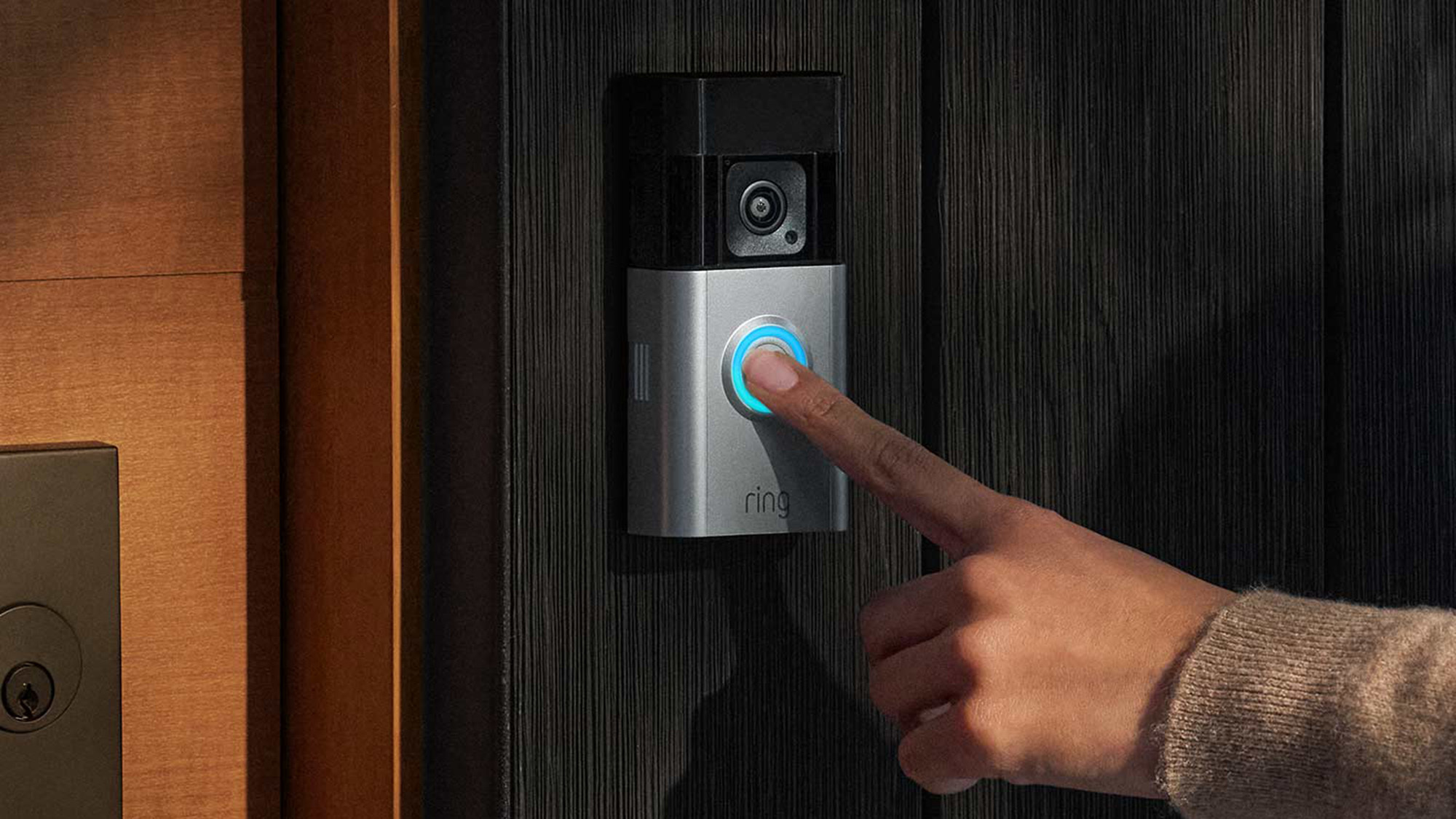
Ring’s industrial design is conservative at this point: a familiar rectangular slab with a camera up top
and a large, easy-to-press button below. It’s available in a couple of finishes, and while it won’t win
design awards, it also won’t clash with most front doors.
The app is where Ring still pulls ahead of bargain rivals. Setup walks you through scanning the QR code,
connecting to Wi-Fi and dialing in motion zones. Once you’re running, the event timeline is easy to scrub,
and thumbnails make it obvious when someone approached versus when a car simply drove by.
Compared with ultra-budget options like the
Blink Video Doorbell, Ring feels less like a science
project and more like a finished consumer product. You spend less time troubleshooting and more time just
using it.
Features & Ecosystem
Ring Protect, Alexa and a Deep Accessory Shelf
Out of the box, you get live view, motion alerts and two-way talk. The experience really opens up when you
add Ring Protect: recorded clips, rich notifications with thumbnail previews, smart alerts that distinguish
people from generic motion, and the ability to dig back through history when something happens overnight.
The broader ecosystem is a big part of the appeal. Ring’s chimes, spotlights, floodlight cams and Ring
Alarm system all plug into the same app, so you’re not juggling multiple logins just to secure your front
door and driveway. If your home leans toward Alexa, this tight integration is a strong argument for
Ring over Nest or Arlo.
If you’re already all-in on Google, however, the
Google Nest Doorbell (Battery) is the better match —
especially if you own Nest Hub smart displays. And if you care most about HDR detail and multi-camera
setups, the Arlo Video Doorbell (2nd Gen) is still
hard to beat on pure image quality.
Value for Money
Not the Cheapest, But Usually the Smartest Buy
On initial price alone, Blink undercuts Ring; you can often find the Blink Video Doorbell significantly
cheaper. But when you factor in subscription value, ecosystem depth and the time you spend managing false
alerts, Ring starts to feel like the smarter long-term choice for most people.
The ongoing cost of Ring Protect is the main catch. If you truly want to avoid any subscription, you
should be realistic about what you’re giving up: no recorded history, no easy way to look back at
overnight events, and far less useful notifications. In that scenario, even the best doorbell feels like a
half-finished solution.
If you’re comfortable budgeting for a Protect plan (at least for the first few years), Ring’s overall
value proposition is strong — especially compared with pricier Nest doorbells or more niche alternatives.
Build, Privacy & Support
Well Built, Cloud-First, and Backed by a Big Ecosystem
The hardware itself feels sturdy, with weather sealing that shrugged off wind, rain and freezing
temperatures in our testing. Ring has enough scale that replacement parts, spare batteries and mounting
wedges are easy to find, which matters for a product you’ll likely own for many years.
On the privacy side, it’s important to understand that Ring is unapologetically cloud-first. Video is
stored on Amazon’s servers, and while you can enable encryption options and control who sees what, this is
not the right platform if you want fully local, self-hosted storage. If that’s a requirement, an
alternative ecosystem like Eufy or a local NVR may be a better fit.
Support and documentation are solid, and Ring’s install guides are straightforward enough that confident
DIYers can usually handle both battery and wired installs. For everyone else, hiring an electrician to
repurpose existing doorbell wiring is a one-time cost that pays off in never worrying about battery life.
Score Breakdown
Performance & Reliability
8.8 / 10
Design & Usability
8.4 / 10
Features & Ecosystem
8.7 / 10
Value for Money
8.6 / 10
Build, Privacy & Support
8.3 / 10
Final Verdict
The Ring Battery Video Doorbell earns its 8.6/10 VoltVerdict Score by doing exactly what
most people need a doorbell to do: show you who’s at the door, alert you quickly when something happens,
and slot neatly into a broader home-security setup without a lot of friction.
It isn’t the absolute sharpest camera on the market and it absolutely wants you on a subscription. But if
you want a smart doorbell that feels polished, reliable and well-supported, it’s still the one we’d buy
first for most homes.
If your budget is tighter or you prefer fewer ongoing costs, check out our
Blink Video Doorbell review. And if you live in Google’s
world, our Google Nest Doorbell (Battery) review will be
the better starting point.
Ring Battery Doorbell FAQ
Does the Ring Battery Doorbell work without a subscription?
Yes, you still get live view, motion alerts and two-way talk. However, recorded clips, longer video
history and smarter notifications all require a Ring Protect plan. For most buyers we recommend
budgeting for at least the basic subscription.
How long does the Ring Battery Doorbell battery last?
Expect roughly 3–6 months per charge depending on motion activity, Wi-Fi strength and temperature.
High-traffic doorways in cold climates will drain the battery faster than quiet, sheltered porches.
Is the Ring Battery Doorbell good for renters?
Yes. Because it runs on battery, you don’t have to touch existing doorbell wiring. You will need to
mount the bracket with screws, but those holes are usually easy to patch when you move out. If you want
something that’s even easier to remove, a
Blink Video Doorbell with a no-drill mount can be a good
alternative.
Can I use Ring without Alexa devices?
Absolutely. You can use Ring with just the smartphone app if you don’t own any Echo speakers or Fire TV
devices. That said, Ring feels best when paired with Alexa speakers and displays that can announce
visitors or show live video automatically.
Is Ring a good choice if I already own Google Nest gear?
You can mix ecosystems, but it’s rarely ideal. If most of your smart home runs through Google Home and
Nest Hub displays, we’d steer you toward the
Google Nest Doorbell (Battery) instead so everything
lives inside a single app and voice assistant.